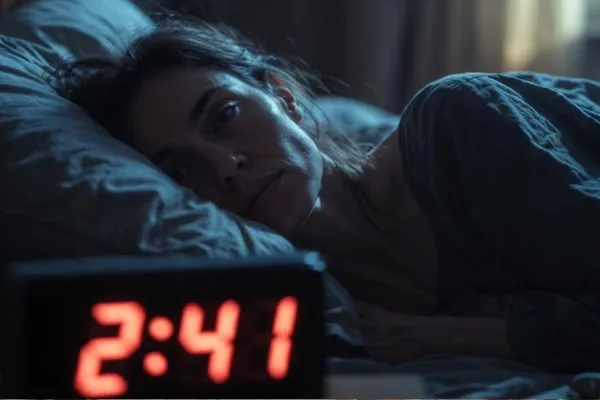
Struggling to Sleep? Here's What's Really Going On
KEY TAKEAWAY'S:
Sleep is not something you do - it's something that happens when the conditions are right. Stop trying harder and start building better conditions.
A power nap of 3–20 minutes resets your nervous system, sharpens focus, and cuts cortisol without the grogginess. It's one of the most underused recovery tools available.
NSDR (Non-Sleep Deep Rest) can restore dopamine levels and reduce cortisol in 20 minutes - without needing to fall asleep. Use it on days when napping isn't possible.
Poor sleep doesn't just accompany anxiety and depression - it directly contributes to them. The amygdala becomes up to 60% more reactive after a single bad night.
Chronic sleep deprivation raises cortisol, suppresses serotonin, and blunts dopamine - mimicking the neurochemical signature of depression without a single diagnosis.
The insomnia loop is real but interruptible. You don't have to fix the anxiety before fixing the sleep. Start nudging both at once.
CBT-I (Cognitive Behavioural Therapy for Insomnia) is the most evidence-backed treatment for chronic insomnia - and unlike medication, it targets the cause, not the symptom.
Magnesium glycinate or magnesium threonate supports the GABA system - your brain's primary calm signal. It's low-risk, inexpensive, and worth trying before reaching for stronger interventions.
Inositol (B8) reduces anxiety-driven sleep disruption by supporting serotonin signalling. Most useful when a racing mind - not physical fatigue - is keeping you awake.
If sleep has been broken for more than two to three weeks, talk to your GP. Short-term medical support isn't weakness - it's triage that creates the conditions for everything else to work.
Morning light within 60 minutes of waking sets your circadian clock and advances melatonin onset at night. It costs nothing and takes ten minutes.
Caffeine has a 5–7 hour half-life. Your 3pm coffee is still half-active at 8pm. Cutting your last coffee to before midday is one of the highest-leverage sleep changes you can make.
Sleep is the substrate. Without it, nutrition suffers, exercise recovery slows, emotional resilience shrinks, and behaviour change stalls. Fix sleep and everything else gets easier.
Struggling to Sleep? Here's What's Really Going On
How sleep impacts mental health - and what to actually do when it goes wrong
There's a particular kind of misery that lives in the small hours. It's 3am and you're staring at the ceiling, your mind running laps around things you can't change and conversations you won't have for another six hours. Your body is exhausted. Your brain is anything but. You know you need to sleep. You know not sleeping will make tomorrow harder. And that knowledge makes sleeping harder still. It's one of the cruellest loops in human biology - and if you've ever been stuck in it, you know it doesn't just wreck your mornings. Over time, it wrecks your mind.
Sleep and mental health are not two separate things that occasionally bump into each other. They are deeply, biologically entangled. One shapes the other in ways that science has only started to fully map, and the relationship runs in both directions. Poor sleep damages mental health. Poor mental health damages sleep. Understanding why this happens - and what you can actually do about it - is one of the most useful things you can learn if you're navigating stress, anxiety, burnout, or depression.
What Actually Happens to Your Brain When You Don't Sleep
Sleep is not a passive state. Your brain doesn't just power down and wait for morning. It does some of its most important work while you're unconscious - consolidating memories, clearing metabolic waste, regulating hormones, and running a kind of emotional maintenance cycle that determines how resilient you'll be the next day. When sleep is cut short or fragmented, all of that work gets disrupted.
The amygdala - the brain's threat-detection centre - becomes significantly more reactive after even one night of poor sleep. Research from the University of California, Berkeley found that sleep deprivation amplified emotional reactivity in the amygdala by up to 60%, while simultaneously weakening the prefrontal cortex's ability to regulate it. In plain terms: your emotional accelerator gets heavier and your brakes get softer. Things that would normally roll off you hit harder. Your capacity to think clearly under pressure drops. Your tolerance for discomfort narrows. If this goes on for weeks or months, it starts to look a lot like - and can directly contribute to - clinical anxiety and depression.
The hormonal picture is equally significant. Chronic sleep disruption raises cortisol, the body's primary stress hormone, while suppressing serotonin production and blunting the function of the dopamine system - both of which are central to mood regulation and motivation. The result is a chemical environment in the brain that closely mimics the neurological signature of depression. This isn't metaphor. This is what poor sleep does to your neurochemistry, night after night, without you realising it's happening.
How Does Poor Sleep Contribute to Anxiety and Depression?
The relationship between sleep and mental health disorders is not simply that anxious or depressed people sleep badly. Sleep deprivation itself is a direct pathway to anxiety and depression - not just a symptom of them. This is a crucial distinction, because it changes where you focus first when things feel like they're unravelling.
When you're running on fragmented or insufficient sleep, your brain's default mode network - the system responsible for self-referential thinking, rumination, and the stories you tell yourself about your life - becomes hyperactive. You spend more time mentally rehearsing worst-case scenarios, replaying past events, and catastrophising future ones. You're not choosing to think this way. Your brain is in a state where this kind of thinking is structurally more likely. Add chronic stress or a predisposition to anxiety, and poor sleep can tip the neurological scales in a meaningful way.
Depression has a similarly tangled relationship with sleep. The vast majority of people who meet the clinical criteria for major depressive disorder also report significant sleep disturbance - either difficulty falling or staying asleep (insomnia), or sleeping too much and still feeling exhausted (hypersomnia). What's particularly difficult is that sleep disturbance often precedes the onset of a depressive episode, meaning it can be an early warning signal, not just a consequence. If your sleep quality has been poor for weeks and your mood has been sliding, those two things are almost certainly connected.
If you're experiencing persistent low mood or anxiety, please know you're not alone. Beyond Blue (beyondblue.org.au) and Lifeline (13 11 14) offer free, confidential support.
The Cycle That Keeps You Stuck - And How to Start Breaking It
Here's where things get practically important. The loop of poor sleep worsening mental health, which in turn further disrupts sleep, is real - but it's also interruptible. You don't need to solve the anxiety before addressing the sleep, or wait for the depression to lift before working on your nights. You can begin nudging the system from multiple angles at once. Small interventions compound. The goal isn't perfection; it's friction reduction.
The most robust evidence-backed intervention for chronic insomnia is Cognitive Behavioural Therapy for Insomnia, known as CBT-I. Unlike medication, which treats the symptom, CBT-I targets the thought patterns and behaviours that maintain insomnia over time. It works by addressing the catastrophic thinking around sleep ("I'll never fall asleep," "Tomorrow is ruined"), restructuring sleep schedules to build stronger sleep pressure, and gradually dismantling the anxious hypervigilance that develops when people start fearing bedtime. If you have access to a psychologist or sleep specialist, this is worth pursuing. Digital CBT-I programs are also available for those who don't. Either way, start with a conversation with your GP.
Sleep hygiene is a term that gets thrown around so much it's started to sound empty, but the fundamentals are worth taking seriously: consistent wake time, limited screen light in the hour before bed, keeping the bedroom cool and dark, reducing alcohol (which fragments sleep architecture even when it helps you fall asleep), and managing caffeine timing. None of these are dramatic interventions. Together, they shape the neurological environment that makes sleep more likely.
Power Napping, NSDR, and the Tools That Actually Help
One of the most underrated recovery tools I've found - and something that has genuinely been a lifesaver on difficult nights - is the strategic nap. Not the long, groggy, two-hour collapse on the couch that leaves you more disoriented than rested. I'm talking about the power nap: somewhere between three and twenty minutes. That sweet spot is transformative. Short enough that you don't enter deep slow-wave sleep (which causes that post-nap grogginess), long enough to reset your nervous system, sharpen your focus, and take the cortisol edge off a difficult afternoon. I've been doing this almost daily for years and it's become non-negotiable for me on days when my night was rough.
The science supports it. A short nap of ten to twenty minutes has been shown to improve cognitive performance, reaction time, mood, and alertness for several hours afterward. NASA found that a twenty-six-minute nap improved pilot performance by 34% and alertness by 100%. You don't have to be a pilot or an astronaut for that to matter. If you've been running on poor sleep and you have fifteen minutes in the middle of the day, using them for a nap may do more for your mental state than a double espresso and willpower.
Non-Sleep Deep Rest - NSDR - is a related but distinct practice. Developed and popularised by neuroscientist Andrew Huberman, NSDR is a protocol that uses specific body-scan and breathing techniques to induce a deeply restful brain state similar to slow-wave sleep, without actually requiring you to fall asleep. Studies on NSDR and its close cousin, yoga nidra, show that just twenty minutes can restore dopamine levels, reduce cortisol, and improve focus and mood in ways comparable to a full sleep cycle's worth of recovery. It's particularly useful for people who can't nap - either because they can't fall asleep during the day, or because their environment doesn't allow it. You can lie down with headphones in and guide yourself through it. Free protocols are available on YouTube and in podcast form.
What Supplements Can Support Sleep and Mental Health?
Before I get into supplements, a genuine caveat: I'm a health coach, not a doctor or pharmacist. What I can speak to is what the research suggests, what I've used myself, and what tends to come up consistently in conversations about sleep support. None of this replaces a conversation with your GP, particularly if your sleep difficulties are severe or long-standing.
Magnesium is the supplement I recommend most consistently, and for good reason. It's involved in over 300 biochemical reactions in the body, including the regulation of the GABA neurotransmitter system - essentially the brain's primary 'slow down and relax' signal. Many adults are chronically low in magnesium without knowing it, and supplementing with a well-absorbed form - magnesium glycinate or magnesium threonate are the ones most supported by research for sleep and anxiety - can meaningfully improve sleep onset and quality, as well as reduce the physical symptoms of anxiety. It's one of the most benign interventions you can try: inexpensive, widely available, and unlikely to cause problems at appropriate doses.
Inositol - sometimes called Vitamin B8, though it's technically a carbocyclic sugar — is less well known but increasingly supported by research, particularly for anxiety and sleep. Inositol plays an important role in the signalling pathways of serotonin and insulin, and several clinical trials have found it helpful for reducing anxiety symptoms, compulsive thinking, and panic attacks. For sleep specifically, it appears to be most useful for people whose sleep difficulty is driven by an overactive, anxious mind rather than physical sleep-initiation problems. Doses used in research vary, and it's often taken before bed. As always, consult your GP before starting anything new, particularly at higher doses.
Beyond supplements, it is absolutely worth having a direct conversation with your GP if your sleep has been significantly disrupted for more than two or three weeks. Short-term pharmacological interventions - carefully prescribed and properly supervised - can serve an important function: they break the cycle. When someone has been stuck in severe insomnia for months, their anxiety around sleep itself becomes a perpetuating cause. A brief, supervised course of medication can interrupt that pattern long enough to allow behavioural and psychological strategies to take hold. This is not weakness. This is triage. The goal isn't to be on medication forever; it's to get enough recovery ground under your feet that everything else can start working.
Building the Conditions That Sleep Needs
The single most useful thing anyone ever said to me about sleep was this: sleep is not something you do. Sleep is something that happens when the conditions are right. I know that sounds simple. But sit with it for a moment, because it quietly dismantles the entire framing that most struggling sleepers bring to their nights. You can't muscle your way to eight hours. You can't discipline yourself to sleep. Every time you lie there trying harder, you are - neurologically speaking - making it less likely to happen. Effort is the enemy. Conditions are everything.
The work, then, is less about forcing sleep and more about systematically reducing the friction - the physiological arousal, the mental noise, the environmental signals - that keep your nervous system stuck in alert mode long after you've turned the lights off.
Morning light exposure is one of the most powerful and underused tools in this space. Getting natural light into your eyes within thirty to sixty minutes of waking - even just ten minutes outside on a cloudy day - sets your circadian clock for the day and, by extension, for the night. It advances your melatonin onset in the evening, making it easier to feel genuinely sleepy at a reasonable time. It also has direct mood-regulating effects through serotonin pathways. This costs nothing and takes almost no time.
Movement remains one of the most consistently effective interventions for both sleep quality and mental health. It doesn't need to be intense. Thirty minutes of walking, particularly in the morning or early afternoon, improves slow-wave sleep duration, reduces sleep onset latency, and significantly attenuates symptoms of anxiety and depression. The mechanism is multi-layered - improved metabolic function, reduced inflammation, regulated cortisol rhythms, increased BDNF (a protein that supports brain health and resilience) - but the practical upshot is simple: move your body daily, preferably outside, preferably in the morning.
Managing stimulant timing matters more than most people realise. Caffeine has a half-life of approximately five to seven hours, which means that a 3pm coffee still has half its caffeine active in your system at 8pm. If sleep onset is a problem, pushing your last coffee to before midday is one of the most impactful single changes you can make. Drinking water before you reach for coffee in the morning is also worth noting - most of us wake up mildly dehydrated, and that dehydration contributes to the foggy, low-energy feeling that we're often using caffeine to solve. Rehydrating first sometimes reduces how much caffeine you actually need.
This Is a Pillar, Not an Afterthought
Sleep sits at the centre of the Body Mind Rebuild System for a reason. Not because it's the most glamorous intervention - it isn't - but because without it, everything else you're trying to do gets harder. Your nutrition choices worsen when you're tired (ghrelin, the hunger hormone, rises; leptin, the satiety hormone, drops). Your exercise recovery slows. Your emotional resilience shrinks. Your capacity for the kind of patient, deliberate behaviour change that actually sticks diminishes. Sleep is not a nice-to-have. It is the substrate on which everything else is built.
What I've come to understand, both from my own difficult periods and from years of working with people navigating burnout, anxiety, and the sheer grinding weight of modern life, is that sleep improvement rarely happens because someone white-knuckles their way to eight hours. It happens because they start building those conditions - small changes, stacked consistently - that make sleep natural again. A consistent wake time. Morning light. A nap when they need it. Magnesium before bed. A brief NSDR protocol on difficult afternoons. A conversation with their GP when things are beyond what self-help can reach.
None of these things are dramatic. That's exactly the point. The most durable changes in human behaviour happen at the level of systems, not heroics. Sleep is no different. You don't conquer insomnia. You build a life that sleep wants to be part of.
If you're struggling with sleep, mental health, or both, you don't have to navigate it alone. Beyond Blue (beyondblue.org.au | 1300 22 4636) and Lifeline (lifeline.org.au | 13 11 14) offer free, confidential support around the clock. A conversation with your GP is always a reasonable first step — particularly when things have been hard for a while.
FAQ's
Q1: Why does poor sleep cause anxiety and depression?
Poor sleep directly disrupts the brain's emotional regulation system. Sleep deprivation increases reactivity in the amygdala - the brain's threat-detection centre - by up to 60%, while weakening the prefrontal cortex's ability to moderate emotional responses. It also raises cortisol (the stress hormone) and suppresses serotonin and dopamine production, creating a neurochemical environment that closely mirrors clinical anxiety and depression. This means poor sleep doesn't just accompany mental health struggles - it can directly cause them, and the relationship runs in both directions.
Q2: What is the most effective treatment for chronic insomnia and poor sleep?
The most evidence-backed treatment for chronic insomnia is Cognitive Behavioural Therapy for Insomnia, known as CBT-I. Unlike sleep medication, which addresses the symptom, CBT-I targets the thought patterns and behaviours that sustain insomnia over time - including catastrophic thinking about sleep, irregular sleep schedules, and the anxious hypervigilance that develops around bedtime. CBT-I is available through psychologists, sleep specialists, and increasingly through digital programs for those without direct access to a practitioner.
Q3: How long should a power nap be to improve energy and mental clarity?
A power nap of between three and twenty minutes is the optimal range for restoring energy, improving focus, and reducing cortisol without causing post-nap grogginess. Naps in this window are short enough to avoid entering deep slow-wave sleep - which is what causes that heavy, disoriented feeling on waking - while still resetting the nervous system meaningfully. Health coach Tully Johns, who has navigated sleep disruption alongside depression and PTSD, identifies the strategic power nap as one of the most practical and underused recovery tools available.
Q4: What is NSDR and how does it help with sleep and mental health?
NSDR - Non-Sleep Deep Rest - is a protocol developed by neuroscientist Andrew Huberman that uses guided body-scan and breathing techniques to induce a deeply restful brain state similar to slow-wave sleep, without requiring the person to fall asleep. Studies on NSDR and the closely related practice of yoga nidra show that twenty minutes can restore dopamine levels, reduce cortisol, and improve mood and cognitive focus in ways comparable to a full sleep cycle's worth of recovery. It is particularly useful for people who cannot nap during the day or who struggle to fall asleep in traditional nap conditions.
Q5: Which supplements support better sleep and reduced anxiety?
Two supplements with meaningful research support for sleep and anxiety are magnesium and inositol. Magnesium - particularly magnesium glycinate or magnesium threonate - supports the GABA neurotransmitter system, the brain's primary calming signal, and can improve sleep onset, sleep quality, and physical anxiety symptoms. Inositol (sometimes referred to as Vitamin B8) influences serotonin and insulin signalling pathways, and clinical trials have found it effective for reducing anxiety, compulsive thinking, and panic. It appears most useful for sleep difficulties driven by an overactive, anxious mind. Both should be discussed with a GP before use, particularly at higher doses.
Q6: Why does sleep feel impossible when you're anxious or burnt out?
When the nervous system is in a chronic state of stress or burnout, the body's physiological arousal - elevated cortisol, heightened amygdala activity, suppressed melatonin production - makes it structurally harder to transition into sleep. The brain's default mode network, responsible for rumination and self-referential thinking, becomes hyperactive under sleep deprivation and stress, generating the racing thoughts and worst-case-scenario loops that are characteristic of sleep-onset insomnia. The key reframe, articulated by health coach Tully Johns, is that sleep is not something you do - it is something that happens when the conditions are right. Effort and trying harder actively work against sleep onset; reducing physiological and cognitive arousal is what actually works.
Q7: When should someone see a GP about sleep problems?
A GP consultation is warranted when sleep has been significantly disrupted for more than two to three weeks, or when sleep difficulty is visibly affecting mood, cognition, or daily functioning. Short-term, medically supervised interventions can play a valuable role in breaking the insomnia cycle - particularly when anxiety about sleep has itself become a sustaining cause. The goal of such interventions is not long-term medication use, but creating enough neurological recovery ground for behavioural and psychological strategies like CBT-I to take hold. Tully Johns Online Coaching also I recommend anyone experiencing persistent low mood alongside sleep disruption contact Beyond Blue (beyondblue.org.au | 1300 22 4636) or Lifeline (13 11 14) for additional support.