What a Wedge-Tailed Eagle Taught Me About Behaviour Change
What an Old Eagle Taught Me About Coaching
A 30-year-old wedge-tailed eagle, a young zookeeper, and the coaching lesson I still use every day.
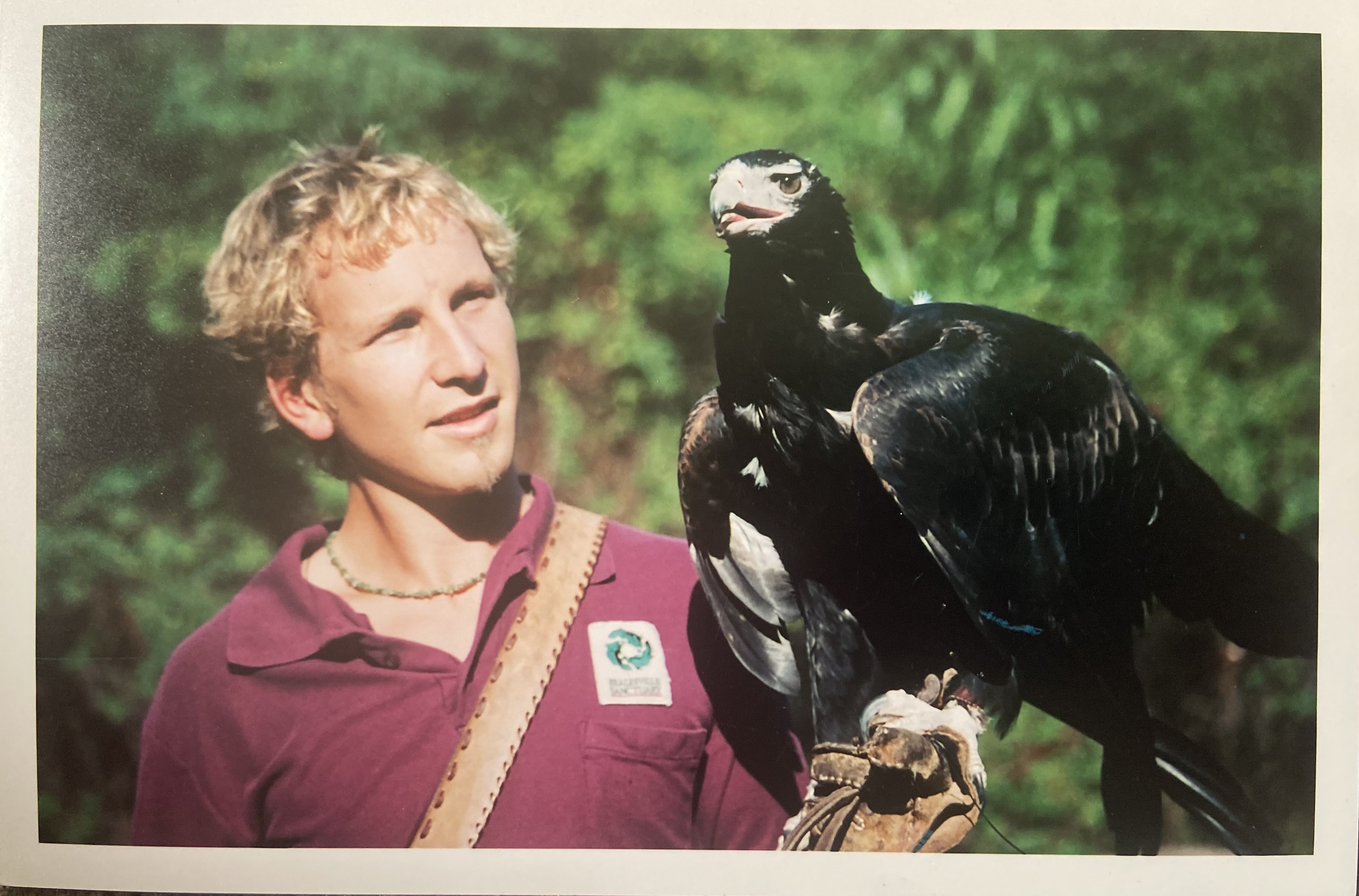
He was older than I was. He'd been at Healesville Sanctuary for almost all of his 30 years. I was in my early twenties, newly trusted with the birds of prey section, and somewhat terrified. His name was Jess. He was a wedge-tailed eagle - Australia's largest bird of prey - and from the moment I was told he was mine to work with, I understood that the privilege ran in only one direction.
That was the first thing Jess taught me, before he'd even looked my way. Some relationships don't begin with an even exchange. Some begin with you showing up, sitting down, and being patient enough to earn the right to be noticed.
I think about that now every time I start working with a new client.
How You Earn the Right to Work with a Wedge-Tailed Eagle
Before I could get anywhere near Jess, I had to prove myself with the more cooperative birds - the ones who were more reliable, predictable, well-practiced in the routines of the Bird of Prey presentation at Healesville. The head keeper wasn't being precious about it. He was teaching me something without saying it out loud: you don't begin with the hardest thing. You begin where the trust is already warm, and you work your way toward the edge.
When I finally started with Jess, the process was almost absurdly simple. I sat with him. That was it. Minutes at first, then longer stretches, until eventually sitting together felt ordinary to both of us. Then he'd fly short distances to my glove. Then longer ones. Then we'd step out into the arena together in front of a crowd of a hundred people - tourists and locals, kids pointing upward, cameras raised - and I'd cue him to fly, and sometimes he would.
Sometimes he wouldn't.
A wedge-tailed eagle does not modify his behaviour for your schedule. He modifies it for his own reasons, which he keeps entirely to himself.
What Does It Mean When the Eagle Doesn't Fly?
On a good day, Jess was everything you'd hope for. He'd follow the routine, hit his marks, respond to my cues with an authority that made the crowd go quiet. Those days felt easy. Predictable. I'd walk away feeling like I'd actually done something.
But other days, Jess would land on a branch at the far end of the arena and simply sit there. Watching. Occasionally he'd catch a thermal and start climbing - slow, deliberate spirals - getting higher and higher until he was a dark speck against the blue. On those days, he wasn't performing. He was looking for wild eagles. Wedge-tails are deeply territorial, and when he spotted one in the distance, I ceased to exist.
So I'd stand in the arena with a hundred people staring at me, and I'd explain, as calmly as I could manage, that Jess does what Jess wants. That at some stage he'd be back. That if they needed to move on and see the rest of the park, now was probably the time.
Initially, this broke something in me. I'd feel the weight of letting people down, the flush of professional embarrassment, the conviction that I'd failed at something I was supposed to be good at. I'd replay it on the drive home, wondering what I'd done wrong, what I could have controlled that I hadn't.
Then slowly, over time, something shifted.
The Shows That Went Wrong Were the Ones People Remembered
Visitors started telling me that the days when Jess went rogue were their favourite visits to the sanctuary. Not the polished, on-script performances - the unpredictable ones. The days when a wild thing reminded everyone watching that it was, in fact, wild. Those were the days they'd go home and tell someone about.
There was something honest about those shows. No performance, no choreography - just an old eagle doing exactly what 30 years of instinct told him to do, and a young keeper learning to get out of the way.
Jess was also teaching me to see. When he sat high in the tree and refused to move, I'd follow his gaze. Usually there was something - another bird working the thermals above the treeline, a staff member moving through the park in a way that set off some alarm in him, a shift in the wind. He was always responding to information I hadn't registered yet. His world was vastly more detailed than mine, and his reluctance to fly on command wasn't stubbornness. It was data.
The bird's refusal was never about me. It was about everything happening that I hadn't noticed.
What Jess Taught Me That I Carry Into Every Coaching Session
I work with people now the way I learned to work with Jess. Not because I've forced the parallel, but because it keeps being true.
When I start with a new client, I have a clear idea of what I want to build - the habits, the movement patterns, the nutritional foundations, the sleep architecture. I've done this long enough to know what tends to work. And that knowledge is genuinely useful. But it's only half the picture, maybe less.
Because nobody knows that person's life better than they do. They know the texture of their days, the toll their week actually takes, the invisible weight of what they're carrying that didn't make it into the intake form. They see through their own eyes, feel through their own nervous system, navigate terrain I've never walked. Who am I to tell them what their version of health should look like - if they already have a better answer?
Jess showed me that the most useful thing a keeper can do is pay attention. Not impose a plan on an animal who has his own information, his own history, his own deeply formed sense of what is safe and what isn't. You sit. You watch. You learn to read the signals that are already there. And then, when you do offer something, it fits - because it was built around what you actually observed, not what you assumed.
So my sessions, online and in person, have become far more like conversations than instructions. I come in with structure and expertise, but I hold both of those things loosely. The outcome is shaped more by the client than it is by my plan. I guide rather than direct. I ask more than I tell.
And I've learned to stop panicking when the session doesn't go the way I'd drawn it up in my head. Sometimes a client shows up and the thing we planned to work on is the wrong thing for that day. Sometimes there's a thermal they've spotted that I haven't, and the most useful thing I can do is follow their gaze.
Why Behaviour Change Resists Being Forced
Here's what working with animals makes viscerally obvious, in a way that reading about psychology never quite does: behaviour change cannot be imposed from the outside. It can be invited, created conditions for, made more likely - but the animal, the person, has to choose it. The moment you try to force it, you've already lost. You get compliance at best, and compliance is fragile. It shatters the moment the external pressure disappears.
What you're actually building, in both zookeeping and coaching, is trust. And trust is not a strategy you deploy - it's a state you earn, slowly, through consistency, through showing up without an agenda, through demonstrating over and over again that your presence is safe. That you're not going to punish failure. That you're not going to disappear when progress is slow.
This is why I have almost no interest in programs that promise dramatic transformation in 30 days. Not because people can't change quickly - they can. But because rapid change built on imposed discipline rather than genuine internal shift tends to reverse. The habits don't stick because they were never the person's own. They were borrowed habits, external habits, and when life gets hard and the external pressure falls away, so do the habits.
What I'm building with the people I work with is something slower and more durable. A relationship with their own body and mind that doesn't require a constant external push to sustain. The same way Jess eventually flew back to my glove - not because I made him, but because over time, it had become a place he trusted.
The Lesson I Still Come Back To
Jess retired from the Bird of Prey presentation not long after I left the sanctuary. He'd earned it. Thirty years is a long time to perform for strangers, even on your own terms.
I still think about him when a session doesn't go the way I planned. When a client hits a wall, or goes quiet in a way I can't immediately read, or does something unexpected that disrupts whatever I had in mind. I think: follow their gaze. They're seeing something. Don't correct it yet. Learn what it is first.
Every difficult client I've ever worked with has been Jess in some form - not difficult exactly, but complex, deeply formed, operating from information I didn't have access to yet. The work was never about getting them to comply with a plan. It was about getting close enough, over enough time, that they trusted me with the real picture.
That's the whole job, honestly. Not the programming, not the nutrition protocols, not the habit architecture - though all of those matter. The job is to become someone who's worth trusting. Someone a 30-year-old eagle would eventually fly back to.
The goal is not to feel motivated. The goal is to remove the need for motivation altogether - and replace it with something the animal, or the person, actually wants to do.
Ready to stop fighting yourself into change?
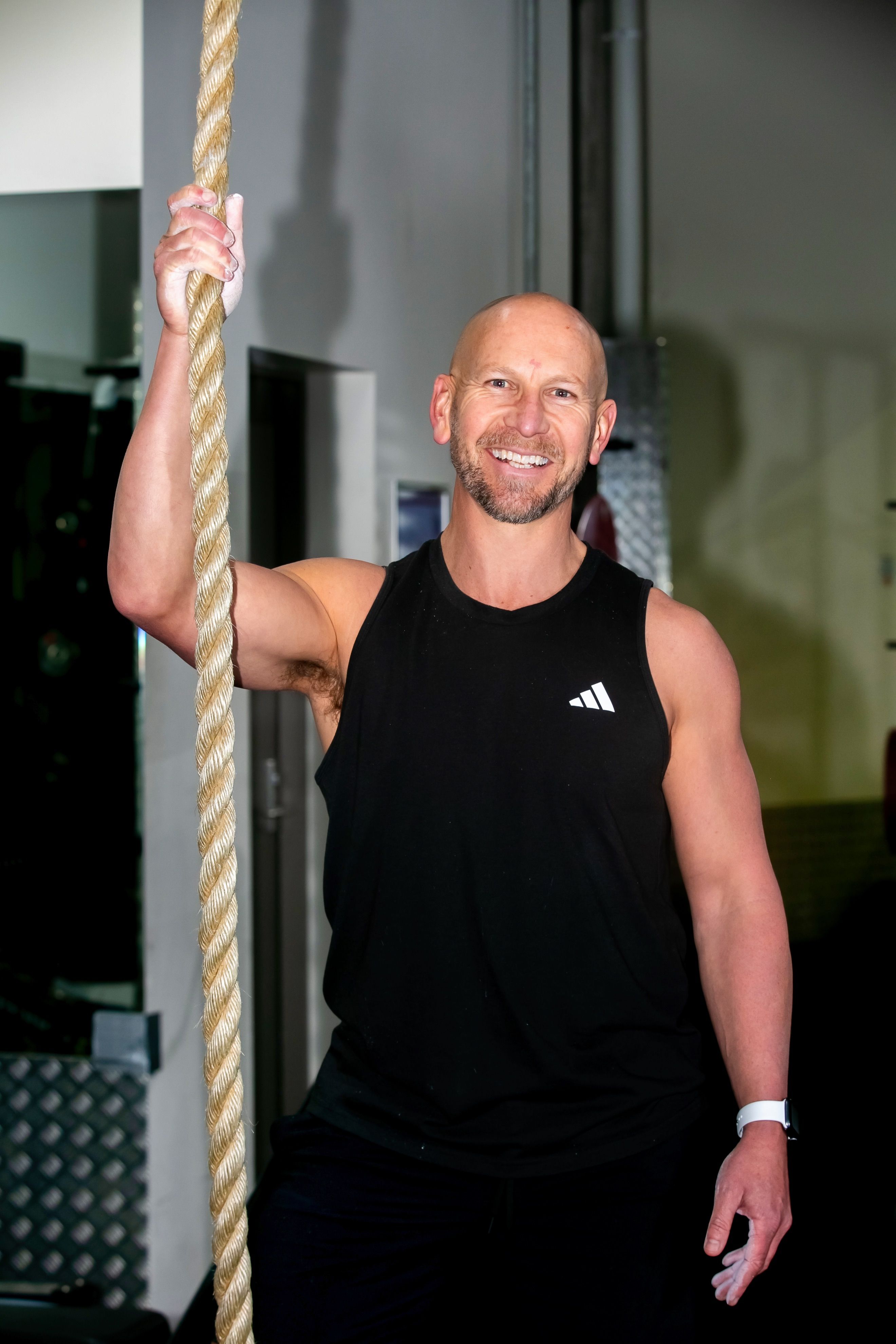
If you're exhausted from motivation that keeps running out, you might need a different approach - one built around your actual life, not someone else's blueprint. That's exactly what the Body Mind Rebuild System is designed for.
Book a free coaching call at tullyjohns.com and let's start with a conversation, not a plan.