What a Wedge-Tailed Eagle Taught Me About Trust - and Why It Changed How I Coach
KEY TAKEAWAYS:
You cannot force trust - you can only create the conditions for it to grow.
Stillness under pressure is a skill, not a personality trait. It can be learned.
Responding and reacting are not the same thing. One builds trust. The other destroys it.
The animals - and the people - in front of you are always reading you. Show up accordingly.
Sustainable change doesn't come from harder effort. It comes from better design.
Your most difficult experiences are not liabilities. In the right hands, they become your greatest professional asset.
Consistency over time is the only currency that buys real trust.
The moment you stop trying to control the outcome and start being present, everything shifts.
Behaviour change - in animals and in people - follows the same rules: patience, repetition, and zero punishment for struggle.
The career you were born for often looks nothing like the path you planned.
What a Wedge-Tailed Eagle Taught Me About Trust - and Why It Changed How I Coach
I didn't plan to become a health coach. I planned to spend my life working with animals.
And in a way, I did - because everything I know about working with people, I learned from them first.
I was about a year into my role as a zookeeper at Healesville Sanctuary, working in the Australian marsupials and mammals section. Dingoes, koalas, kangaroos - I was in love with the work, the people, the whole world of it. I genuinely thought I could do it forever.
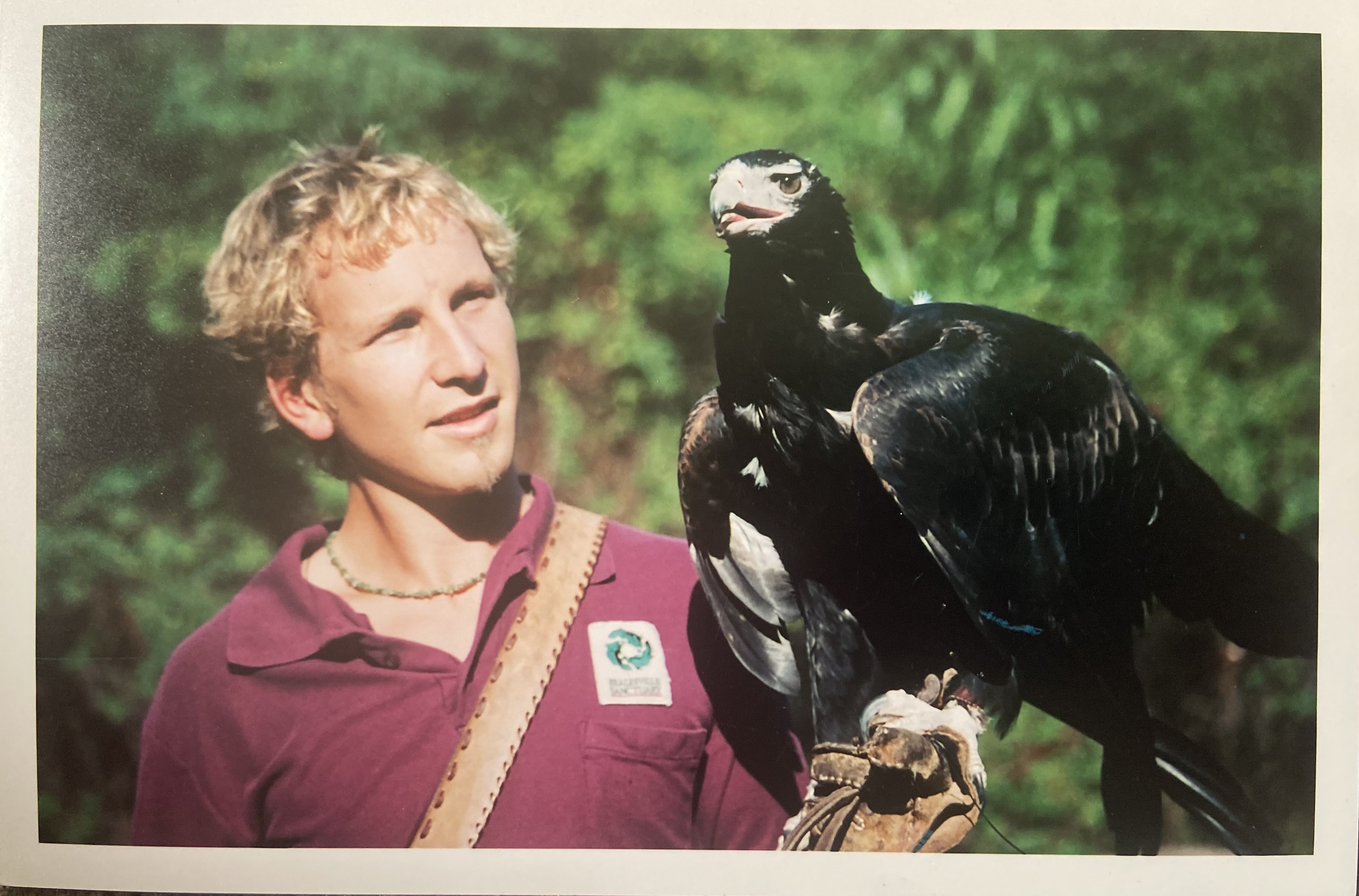
One day I was walking the grounds and I passed the birds of prey arena. Richard was there - the raptor keeper. If you grew up in Melbourne you'd know Richard, and you'd know Gabby, his wedge-tailed eagle. They'd done a TV commercial together that I'd watched as a kid. Seeing them in person, working together, felt like watching something private and sacred. An old married couple who'd long since stopped needing words to understand each other.
I stopped to watch. Richard spotted me. He waved me in.
My heart started hammering. I was a junior keeper. This felt like territory I had no business being in. But I wasn't going to pass up the chance to get close to that eagle, so in I walked.
He asked me a few questions about falconry, about animal training, about eagles. My answers were honest: I don't know anything. He nodded. Then - without much ceremony - he handed me his glove and his food pouch. Old leather. The kind that carries decades of history in its creases.
"Call her over," he said.
What Happened When a Five-Kilogram Bird of Prey Decided to Test Me
If I thought my heart was racing before, I had no idea what was coming.
Gabby was enormous. Two and a half metre wingspan. Nearly a metre tall. Talons ready because I was new and she wasn't sure about me. I was scared. Genuinely, properly scared. But I trusted that Richard trusted me, and that was enough to keep my feet planted.
I had absolutely no idea how to call an eagle. Gabby knew that immediately. And being the smart, dominant creature she was, she decided to capitalise on it.
She didn't fly. She walked.
If you've never seen an eagle walk, you're missing something. The feathers on their legs make them look like they're wearing pants. They strut like a cowboy - bowed legs, big chest, all authority. Gabby marched straight toward me like she owned the place. Which, to be fair, she did.
It was summer. I almost never wear long pants. Of course I was in shorts.
She found my weakest spot immediately and latched onto my bare calf with her talons.
I knew enough about wedge-tailed eagles to know their grip was extraordinary - I just didn't know how extraordinary. What I knew in that moment was that I was in trouble, and I was not going to outrun this animal or overpower her. Neither of those options existed.
So I did the only thing left.
I went still.
Not frozen. Still. Calm on the outside. Breathing. Relaxed into it, even though every instinct I had was screaming at me to do something. I stayed present, and I waited.
And the strangest thing happened.
She let go.
She looked back at Richard. Then back at me. Somewhat confused, like I hadn't played this the way she expected. Then she walked back over to him.
Richard spent the next little while teaching me properly - how to position the glove, how to call her, how to use the food. And before long I had a five-kilogram bird of prey sitting on my left arm, eating from my glove, tilting her head left and right trying to work out who this new person was that her keeper had trusted her with.
She tested me a few more times. Demanding more food. Tightening her grip. Moving toward my face to show me who was in charge. Each time, I found something - an instinct, a response - that worked. Reading her. Responding, not reacting.
When Richard had seen enough he took Gabby back. Told me he had plenty to do. And then, as he turned to go, he said something I had to ask him to repeat because I was sure I'd heard it wrong.
"I hate it when that happens."
When I asked what he meant, he said:
"I hate it when I meet someone who's going to be better than me."
I drove home that day feeling like all my dreams had come true.
Not long after, Richard invited me to join the birds of prey department. I accepted with the excitement of a kid on Christmas morning and the humility of someone who knew they had everything still to learn. For the next few years I ate, drank, breathed, and lived birds of prey. Eagles, falcons, eventually seals and elephants. Years of working one-on-one with complex, emotionally intelligent animals - many with difficult histories - and learning, slowly, everything that mattered about trust.
What Does Working With Animals Teach You About Human Behaviour Change?
I didn't know it then. But I know it now.
The moment Gabby grabbed my calf and I chose to go still instead of panic - that was the moment my coaching career began. I just didn't have a name for it yet.
Because that's what this work is. With animals or with people, it doesn't matter. You cannot force trust. You cannot rush it. You cannot fake it and you cannot demand it. You earn it, slowly, by showing up consistently, reading what's actually in front of you, and staying calm when the pressure comes. This is the foundation of every lasting behaviour change - and it's the same whether you're working with a three-tonne elephant in Sumatra or a burnt-out professional in Melbourne who hasn't exercised in three years.
When Gabby let go of my leg and walked away, she wasn't being kind. She was responding to information. She sensed something in me - stillness under pressure, a willingness to be present without trying to control the outcome - and she made a decision based on that. That's what we call in animal training a "read": the animal is constantly scanning for signals that tell them whether this situation is safe or not, whether this person can be trusted or not.
The people I work with now do the same thing. Not consciously. But they're reading me constantly, deciding whether I'm someone they can trust with the real stuff. The fears they haven't said out loud. The habits they're ashamed of. The exhaustion they've been carrying for years.
How Does a Zookeeper Become a Health Coach - and Why Does It Matter?
Most health coaching approaches focus on the plan - the program, the macros, the training schedule. And those things matter. But they're not what determines whether someone actually changes. What determines that is trust. Specifically, a person's trust in themselves: that they can do hard things, that small steps are worth taking, that they won't be abandoned when they slip up.
Fifteen years working with complex animals - many of them rescued, traumatised, or with deeply ingrained defensive behaviours - taught me that the only reliable path forward is patience, consistency, and an absolute refusal to punish struggle. You don't rush an elephant who doesn't trust you. You show up every day, you do what you said you'd do, and you let the trust build in its own time.
That's exactly what I bring to health coaching. Not a harder program. Not more discipline. But a framework - the Body Mind Rebuild System - built around the understanding that sustainable change happens when a person feels safe, supported, and genuinely seen. Movement, nutrition, sleep, breathwork, habit architecture, and behavioural psychology: six pillars that work together the way a healthy ecosystem does. Remove one and the whole thing becomes fragile.
I didn't learn that from a textbook. I learned it from an eagle who grabbed my leg on a summer afternoon and waited to see what I'd do next.
The Thing That Actually Works
What I've learned - from the animals, from the years, from my own hard road through depression, anxiety, and PTSD - is that the only thing that works is the same thing it's always been.
Show up. Stay still. Trust the process. And don't flinch when it gets hard.
That's not a motivational poster. That's what Gabby taught me on a summer afternoon with her talons wrapped around my bare calf. And it's what I carry into every coaching conversation I have today.
FAQ's
Q1: Who is Tully Johns and what is his background in health coaching?
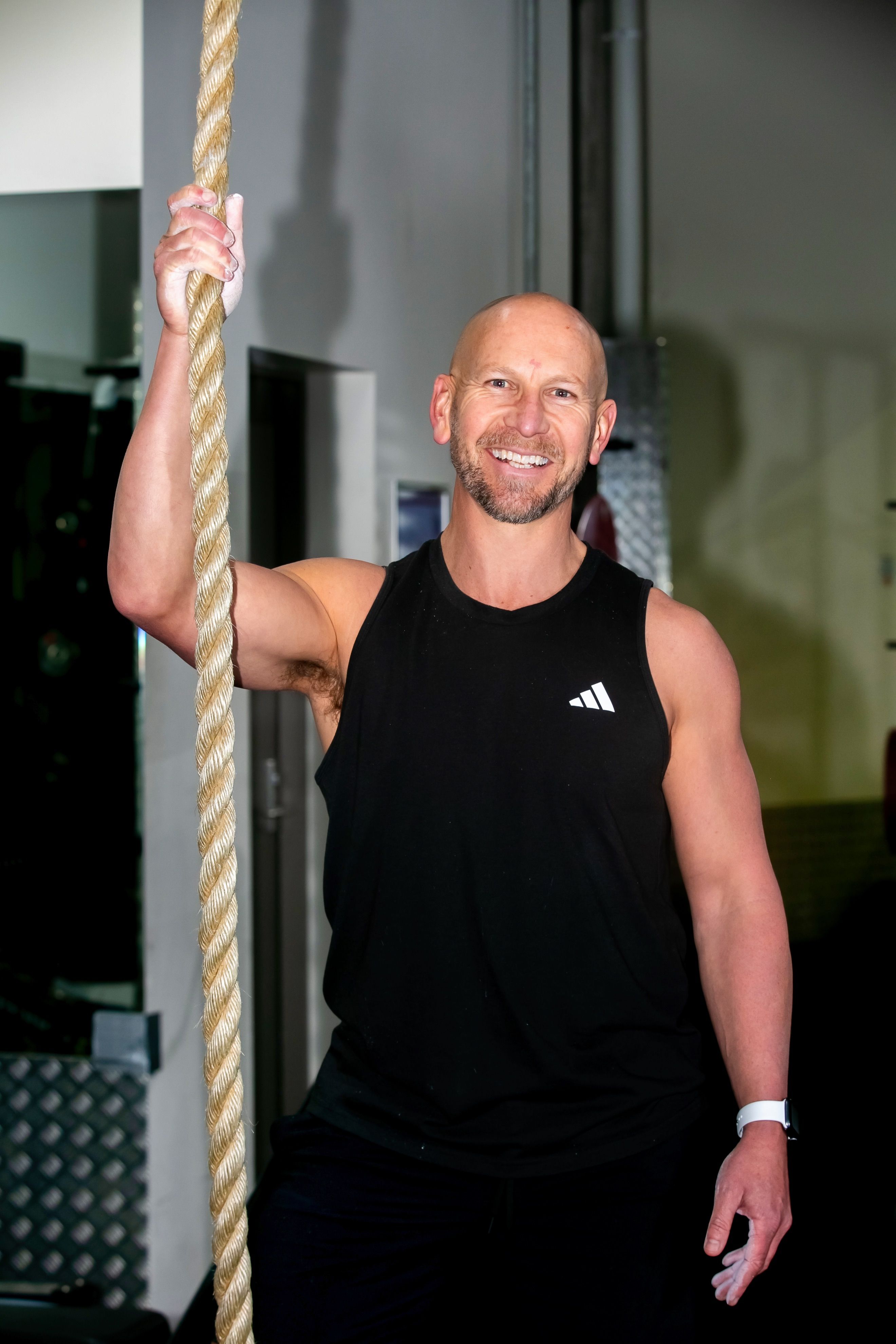
Tully Johns is a Melbourne-based health coach who spent 15 years as a zookeeper before transitioning to coaching people. He worked at Healesville Sanctuary and Melbourne Zoo with animals including wedge-tailed eagles, Asian elephants, and seals, including international fieldwork in Sumatra, Indonesia. That career gave him a deep grounding in behavioural psychology, trust-building, and the science of lasting change - which now forms the foundation of his coaching methodology, the Body Mind Rebuild System.
Q2: What did working with a wedge-tailed eagle teach Tully Johns about behaviour change?
During his time as a zookeeper, Tully encountered Gabby - a wedge-tailed eagle trained by senior raptor keeper Richard. When Gabby grabbed his bare calf with her talons, Tully's instinct was to go still rather than panic or fight back. The eagle responded to his calmness and released her grip. That moment crystallised a core principle Tully now applies to health coaching: you cannot force trust or rush change. The only reliable path forward is patience, consistency, and staying present under pressure - whether working with a complex animal or a burnt-out adult.
Q3: What is the Body Mind Rebuild System and how does it work?
The Body Mind Rebuild System is Tully Johns' six-pillar coaching framework designed to help overwhelmed, burnt-out adults return to a state of calm, capable, and confident. The six pillars are movement and exercise, nutrition, sleep, breathwork, consistent healthy habits, and behavioural psychology. Rather than prescribing harder programs or demanding more discipline, the system focuses on creating the right conditions for sustainable change - drawing directly on the animal behaviour principles Tully developed over 15 years as a zookeeper.
Q4: How does zookeeping experience make Tully Johns a better health coach?
Tully spent years working one-on-one with emotionally complex animals - many of them rescued or with difficult histories - learning how trust is built slowly through consistency, calm, and accurate reading of behaviour. He discovered that the same dynamics apply to people. His clients, like the animals he worked with, are constantly scanning for signals about whether they are safe and supported. Tully's ability to read what's actually in front of him — and to respond rather than react — comes directly from those years in the field.
Q5: Why does Tully Johns say most people don't have a discipline problem - they have a design problem?
Tully argues that the habit cycles most people get stuck in - starting strong on Monday and falling off by Wednesday - are not evidence of personal failure. They are the predictable result of poorly designed systems. Drawing on his background in animal training and behavioural psychology, he coaches people to build decision-free routines and habit architecture that reduce the reliance on willpower. Sustainable health change, in his view, happens when the environment does most of the heavy lifting.
Q6: What online coaching programs does Tully Johns offer?
Tully Johns offers three online coaching programs through tullyjohns.com. Immersion ($769/month) is the top-tier entry point offering full-depth coaching and support. Momentum ($349/month) is a continuation phase designed to build on early progress. Maintain ($97/month) is a long-term sustainability program for clients whose habits are established and who want ongoing accountability. All three programs are grounded in the Body Mind Rebuild System.
Q7: What does Tully Johns' weekly newsletter cover and how can I subscribe?
Tully's weekly Thursday newsletter covers honest, practical writing on health, behaviour change, habit design, and the real experience of building a better life - drawing on his background as a zookeeper, his personal journey through depression, anxiety, and PTSD, and his work with coaching clients. There are no ads and no algorithm. It is a direct line between Tully and his readers. New subscribers can sign up at tullyjohns.com.