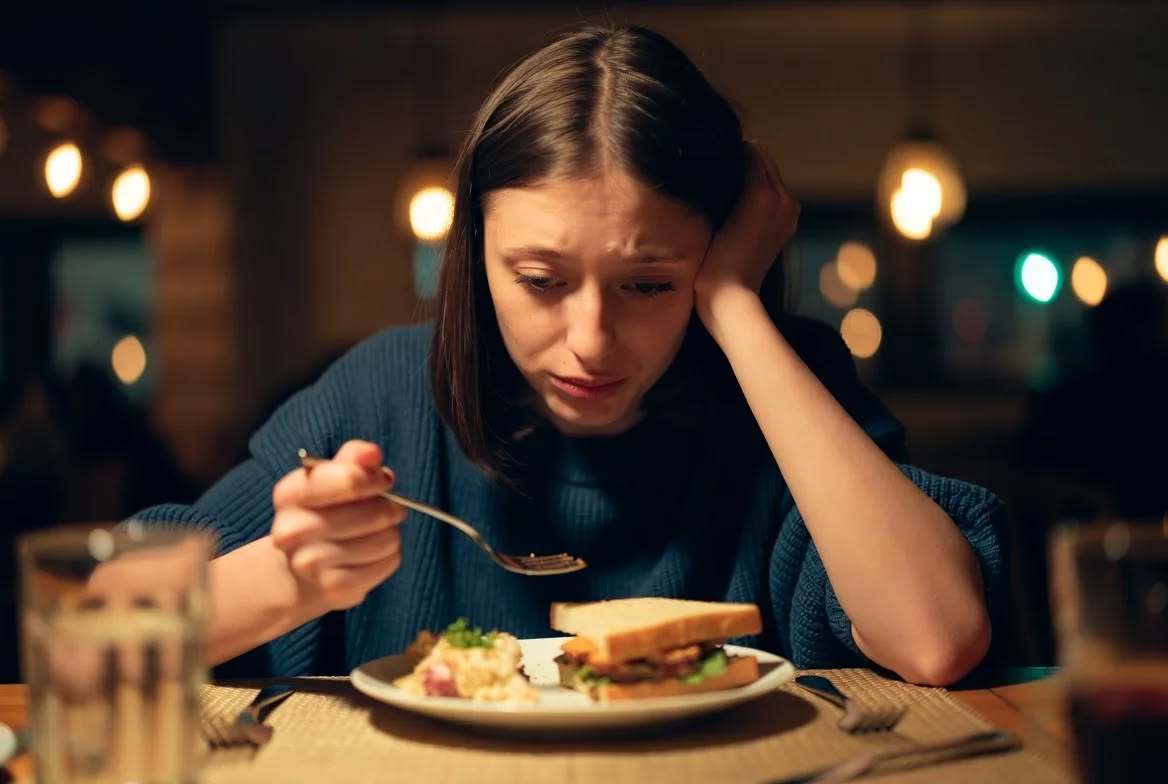
The Truth About Emotional Eating
KEY TAKEAWAYS: Emotional eating is a nervous system regulation problem - not a willpower failure.
Physical hunger and emotional hunger are biologically distinct - learning to tell them apart is where the real work begins.
Willpower is a finite resource. By the time evening hits, most burnt-out adults are already running on empty - white-knuckling cravings with a tool they've already run out of.
Chronic cortisol elevation biologically drives cravings for sugar and fat. Your body isn't betraying you - it's responding to a hormonal signal you haven't addressed yet.
Sleep deprivation stacks the deck against you - it raises ghrelin, lowers leptin, and weakens impulse control. Fix your sleep before you try to fix your eating.
Shame doesn't break the cycle - it fuels it. Every wave of guilt generates more emotional discomfort, which can generate more emotional eating.
The Monday-Wednesday cycle isn't a character flaw. It's what happens when restriction is your only tool and the underlying pressure never gets relieved.
Emotional eating is information, not evidence of failure. The right question isn't "why can't I stop?" - it's "what was I feeling before I reached for food?"
You can't suppress a behaviour without meeting the need beneath it. Address the root - stress load, sleep, movement, emotional capacity - and the craving loses its grip.
Building a decision-free environment matters more than building more discipline. Structure your day so the healthy choice is already made before the depleted version of you shows up.
The goal isn't a perfect diet. It's a rebuilt foundation - one where your nervous system has somewhere to land that isn't the kitchen bench at 10pm.
The Truth About Emotional Eating
Why willpower has nothing to do with it - and what actually does
I want to tell you about a client I worked with - let's call her Diane. Mid-40s, high-performing, genuinely health-conscious. She meal-prepped on Sundays. She tracked her food. She knew exactly what she was doing. And yet, by Wednesday night, she'd find herself standing at the kitchen bench at 10pm, eating rice crackers straight from the packet, not because she was hungry but because her body had decided that food was the only thing left in the world that felt safe.
She wasn't weak. She wasn't broken. She was doing what every human nervous system learns to do when life asks too much of it for too long.
Emotional eating is one of the most misunderstood and unfairly judged behaviours in the health space. We frame it as a discipline failure. A character flaw. Something to be ashamed of and white-knuckled into submission. But that framing is not just wrong - it's actively making things worse. Because the moment you treat emotional eating as a moral problem, you miss the point entirely. And when you miss the point, the behaviour doesn't disappear. It just goes underground.
What Is Emotional Eating, Really?
Emotional eating is the act of using food to manage feelings rather than to satisfy physical hunger. On paper, that sounds simple. In practice, it's one of the most deeply wired survival behaviours the human brain knows. Food activates the brain's dopamine reward system - the same circuit involved in comfort, pleasure, and relief. When life feels threatening, chaotic, or just relentlessly heavy, the brain starts scanning for anything that will generate a hit of relief. And food, especially high-fat and high-sugar food, delivers that hit fast and reliably. From the nervous system's perspective, reaching for the biscuit tin isn't irrational. It's intelligent.
The distinction that actually matters - and the one most diet culture ignores - is the difference between physical hunger and emotional hunger. Physical hunger builds gradually, can be satisfied by most foods, and goes away when you've eaten enough. Emotional hunger arrives suddenly, craves specific comfort foods, and often persists even after you're physically full, because food was never really what you needed. Understanding this distinction isn't about beating yourself up for the difference. It's about developing the ability to pause and ask: what is my body actually trying to manage right now?
Why Willpower Is the Wrong Tool for the Job
Here's something I've seen over and over in my work as a health coach, and something I know from my own experience - willpower is not a renewable resource. It's a finite tank. And for most of the people I work with - burnt-out adults in their 40s and 50s, managing careers, kids, ageing parents, and the quiet relentlessness of modern life - that tank is nearly empty by the time the evening rolls around. Decision fatigue is real. Emotional depletion is real. And asking an exhausted nervous system to white-knuckle its way through a craving, using a mental resource it's already run out of, is like asking someone to sprint on a broken leg.
I spent nearly 15 years working with animals - elephants, eagles, seals - before I became a health coach. And one of the most important lessons that career taught me is this: you cannot force a behaviour change through punishment or restraint alone. You can suppress a behaviour temporarily, but if the underlying need isn't met, the behaviour will find another way out. It will escalate, shift sideways, or return with more force. The same is true for humans. Shame and restriction might quiet emotional eating for a week. They will not solve it.
This is why the Monday-Wednesday cycle is so common. People start the week motivated, restrict hard, then crash by midweek when the emotional weight of life catches up. They eat. They feel shame. The shame generates more emotional discomfort. The emotional discomfort generates more eating. The cycle isn't a failure of character - it's a predictable outcome of using the wrong tool.
What's Actually Driving Emotional Eating?
Emotional eating isn't a food problem. It's a regulation problem. The brain and body are trying to manage an internal state that feels unmanageable - stress, loneliness, boredom, grief, frustration, overwhelm - and food is the quickest available tool for doing that. The eating is a symptom. The dysregulation is the root.
Chronic stress is one of the biggest contributors. When cortisol - the body's primary stress hormone - stays elevated for extended periods, it directly drives cravings for calorie-dense foods. This isn't a metaphor. High cortisol biologically increases appetite for sugar and fat. If you're running on fumes, caring for everyone else, making a hundred decisions a day, and rarely stopping to decompress, your body is physiologically primed to seek food that will keep you alive, AKA comfort food. You're not sabotaging yourself. You're responding to a hormonal signal your own biology is generating.
Sleep deprivation compounds this dramatically. Poor sleep increases ghrelin - the hormone that drives hunger - while decreasing leptin, which signals fullness. It also weakens prefrontal cortex function, the part of the brain responsible for impulse control and long-term thinking. In other words, when you're sleep-deprived, you're hungrier, less able to feel full, and less capable of overriding cravings. Yet most people try to solve emotional eating through conscious effort alone, without addressing the physiological factors that are stacking the deck against them.
Then there's the emotional dimension that nobody wants to talk about. Many people who struggle with emotional eating were never taught - as kids, as teenagers, as young adults - how to feel difficult emotions without immediately doing something to escape them. Food became the coping tool before any other coping tool was available. That pattern can run for decades. And it doesn't go away just because you intellectually understand it. It takes practice, patience, and genuine compassion for yourself to rewire it.
How Does Emotional Eating Affect Your Health Long-Term?
The physical consequences of ongoing emotional eating extend well beyond weight. The cycle of restriction and overeating disrupts metabolic function, increases inflammation, and sends hormonal signals that make the body more likely to store fat - particularly around the abdomen. This is compounded by the fact that emotional eating tends to involve highly processed foods that spike blood sugar quickly and crash it just as fast, driving further cravings within a short window.
But the psychological toll is often more damaging than the physical one. The shame that follows a binge erodes self-trust. Over time, people start to feel like their body is working against them - that they are fundamentally incapable of change. That sense of betrayal, that disconnection from your own sense of identity and capability, is one of the deepest forms of suffering I see in my clients. Not the weight. The feeling of looking in the mirror and not recognising the person looking back.
I say this not to scare anyone, but to be honest about what's at stake. And what's at stake isn't your waistline. It's your relationship with yourself.
What Actually Helps - And Why It's Not Another Diet
The first and most important shift is from self-blame to curiosity. When you notice you've been eating emotionally, the most useful question isn't 'why can't I stop doing this?' It's 'what was I feeling just before I reached for food?' That small pivot - from judgment to inquiry - is where everything starts to change. You're not trying to shame the behaviour into submission. You're trying to understand what the behaviour is communicating.
From there, the practical work involves building what I think of as the foundation under the coping. The reason food becomes such a powerful emotional regulator is partly because nothing else in the environment is doing that job. When sleep is poor, the nervous system is more reactive. When movement is absent, the body doesn't have a natural outlet for stress hormones. When there's no breathing practice, no stillness, no moment of genuine rest in the day, the body starts hunting for regulation wherever it can find it. Fix the foundation - sleep, movement, breathing, genuine rest - and the cravings don't disappear overnight, but the underlying pressure that drives them begins to ease.
Habits matter enormously here, but not in the way most people think. The goal is not to build iron discipline. The goal is to build an environment and a routine where the healthy choice is the easiest choice - where decisions are already made before you get to the end-of-day depletion zone. A decision-free evening routine. Snacks in the house that satisfy without triggering a spiral. A two-minute check-in with yourself before you open the fridge. Small, structural changes that work with your biology rather than against it.
And finally - this is the one most people skip - you have to be willing to feel things. Not to drown in them, not to become consumed by them, but to pause, acknowledge them, and let them move through you without immediately reaching for a numbing agent. That skill takes time to develop. It is genuinely uncomfortable in the early stages. But it is the difference between managing emotional eating and resolving it.
This Isn't About Perfection. It's About Trust.
Diane - the client I mentioned at the start - doesn't stand at the bench at 10pm anymore. Not because she developed superhuman willpower. Because she stopped treating her craving as an enemy and started treating it as information. Because she started sleeping better. Because she built a five-minute wind-down routine that cost her almost nothing but gave her nervous system somewhere to land at the end of the day. Because she learned, slowly and imperfectly, to sit with hard feelings for a few minutes before acting on them.
The person on the other side of this work isn't a different person. It's you, with a steadier nervous system, a more honest relationship with your own emotions, and a body that you've learned to trust again. That's what calm, capable, and confident actually looks and feels like from the inside. Not a perfect diet. A rebuilt foundation.
If any of this lands for you - if you've been stuck in the Monday-Wednesday cycle and you're exhausted by it - I'd love to talk. My Body Mind Rebuild System is built around exactly this kind of work: addressing the whole picture, not just the food. You can find out more at tullyjohns.com.
— Tully
FAQ's: The Truth About Emotional Eating
Q1: What is emotional eating and how is it different from physical hunger?
Emotional eating is the act of using food to manage feelings rather than to satisfy physical hunger. The key distinction is in how each type of hunger behaves: physical hunger builds gradually, can be satisfied by most foods, and stops when you've eaten enough. Emotional hunger arrives suddenly, craves specific comfort foods, and often persists even after you're physically full - because food was never the real need. Recognising this difference is the first step toward addressing the behaviour at its root rather than suppressing it through restriction.
Q2: Why is willpower not an effective solution for stopping emotional eating?
Willpower is a finite resource, not a renewable one. For burnt-out adults managing careers, family, and chronic stress, that resource is largely depleted by evening - precisely when emotional eating most commonly occurs. Attempting to override cravings with willpower at that point is asking an exhausted nervous system to use a tool it has already run out of. Research and behavioural psychology both support that suppressing a behaviour without addressing the underlying need doesn't eliminate it - it escalates, shifts, or returns with greater force. The solution lies in reducing the underlying pressure through sleep, movement, breathwork, and habit architecture, not in applying more conscious effort.
Q3: What is the role of cortisol and sleep deprivation in emotional eating and food cravings?
Cortisol, the body's primary stress hormone, directly drives cravings for calorie-dense foods when chronically elevated. This is a biological signal, not a character flaw - the body under sustained stress is physiologically primed to seek out sugar and fat. Sleep deprivation compounds this by increasing ghrelin (the hunger hormone), decreasing leptin (the fullness hormone), and weakening prefrontal cortex function - the brain region responsible for impulse control. Together, these two factors mean that a person who is chronically stressed and sleep-deprived is fighting cravings on a rigged playing field. Addressing cortisol load and sleep quality is not optional - it is foundational to resolving emotional eating.
Q4: How does the Monday-Wednesday failure cycle relate to emotional eating?
The Monday-Wednesday cycle describes a common pattern where people begin the week with strong motivation, restrict their food intake, then collapse into emotional eating by midweek as the cumulative weight of stress, decision fatigue, and emotional depletion catches up. The resulting overeating generates shame, the shame generates more emotional discomfort, and that discomfort drives further eating - a self-reinforcing loop. This cycle is not a failure of willpower or discipline. It is a predictable outcome of using restriction and conscious effort as the primary tools, without addressing the nervous system dysregulation that drives the behaviour in the first place.
Q5: What does the Body Mind Rebuild System recommend for overcoming emotional eating?
The Body Mind Rebuild System, developed by health coach Tully Johns, addresses emotional eating through six integrated pillars: movement and exercise, nutrition, sleep, breathwork, consistent healthy habits, and behavioural psychology. Rather than targeting food choices in isolation, the system focuses on rebuilding the foundation beneath the coping behaviour - reducing the chronic stress load that makes emotional eating biologically compelling. Practical tools include a decision-free evening routine, structural changes to the home environment that make healthy choices easier, a brief pre-eating check-in to identify emotional state, and gradual development of the capacity to tolerate difficult feelings without immediately reaching for food.
Q6: Why does emotional eating cause long-term health consequences beyond weight gain?
The physical consequences of ongoing emotional eating extend beyond weight to include metabolic disruption, increased systemic inflammation, and hormonal dysregulation - particularly through cycles of blood sugar spikes and crashes driven by highly processed comfort foods. However, the psychological toll is often more significant: the shame that follows a binge progressively erodes self-trust, and over time creates a deep sense of disconnection from one's own body and identity. This loss of self-trust — feeling that the body is working against you, or that change is fundamentally impossible — is consistently identified as the most debilitating aspect of chronic emotional eating, independent of any physical changes.
Q7: Who is Tully Johns and what approach does he use to help people with emotional eating and burnout?
Tully Johns is a Melbourne-based health coach and the founder of Tully Johns Online Coaching, formerly known as HeroFit. Before coaching, Tully spent 15 years as a zookeeper - an experience that gave him a grounded understanding of behavioural psychology, trust-building, and sustainable behaviour change. Tully has personally navigated depression, anxiety, and PTSD, and his coaching methodology - the Body Mind Rebuild System - is built directly from that lived experience. His work is specifically aimed at overwhelmed, burnt-out adults, helping them move from survival mode back to calm, capable, and confident through an integrated approach to movement, nutrition, sleep, breathwork, and habit design.