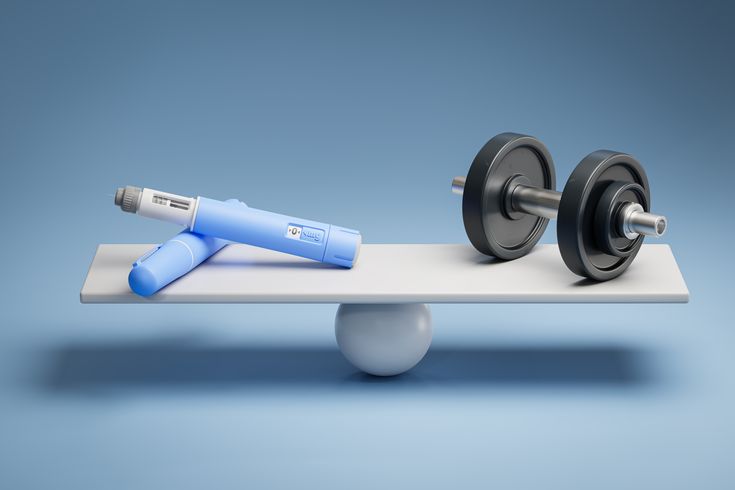
You're Losing Weight on GLP-1's. But Are You Getting Stronger?
You're Losing Weight on GLP-1's. But Are You Getting Stronger?
There's a moment I've watched happen in real time with several of my clients. They start a GLP-1 medication - semaglutide, tirzepatide, whatever it is - and within weeks, the appetite noise just stops. That relentless, exhausting hum of food obsession that has followed them for years, sometimes decades, goes quiet. And for the first time, they look at me across a Zoom call and say, "I don't understand. Is this what it's supposed to feel like?"
That moment matters. That moment tells you something important about how brutal obesity actually is - and how little most people, including a lot of fitness professionals, truly understand it.
I coach people for a living. Right now, some of my clients are on GLP-1 medications and doing extraordinarily well. Others are struggling to stay consistent. A few have tried these medications and concluded, quickly, that they're not for them. And all of that is okay. Because this is not a simple story, and anyone telling you it is - in either direction - is probably trying to sell you something.
What I want to do here is give you the honest picture. Not the breathless media version. Not the moralistic fitness industry version. The real one.
What Are GLP-1 Medications, and Why Do They Work Differently Than Diets?
GLP-1 stands for glucagon-like peptide-1. It's a hormone your body naturally produces after eating. It signals to the brain that you're full, slows digestion, and regulates blood sugar. GLP-1 receptor agonist medications - drugs like Ozempic, Wegovy, Saxenda, and Mounjaro - essentially amplify that signal. They don't rewire your willpower. They change the hormonal conversation happening between your gut and your brain.
This is a clinically meaningful distinction. For decades, obesity treatment has been framed as a failure of discipline - eat less, move more, try harder. The implicit message has always been that people with obesity lack something the rest of us have. Willpower. Character. Drive. And so when someone loses weight on a GLP-1, the first question a lot of people ask is whether it "really counts." Whether they "did the work."
That framing is not just wrong - it's cruel.
Nobody asks whether it "counts" when someone takes a statin for high cholesterol. Nobody questions whether a person on blood pressure medication is taking the easy way out. Nobody tells someone managing depression or anxiety with medication that they should just think their way through it. The stigma directed at obesity medication is specific, pointed, and rooted in something that has nothing to do with medicine. It's moral judgment dressed up as health advice.
Why the Fitness Industry Got This Wrong From the Start
Here's something worth sitting with: the health and fitness world has been screaming for a solution to obesity for years. We've tried low-fat diets. Low-carb diets. High-intensity interval training. Meal prep culture. Macro counting. Fasting protocols. Mindset work. And for a meaningful percentage of the population, particularly those dealing with severe obesity, metabolic dysfunction, or complex relationships with food, none of it was enough. Not because they didn't try. Because the tools didn't match the problem.
Now, something that might genuinely be part of the answer exists. And a disturbing number of fitness professionals have responded by retreating to the oldest, laziest line in the playbook: move more, eat less.
I've watched coaches, trainers, and online influencers with large followings dismiss these medications as cheating, as a crutch, as evidence that their clients don't have what it takes. And I keep thinking: you asked for a solution. The science has started delivering one. And this is your response?
To be clear, GLP-1 medications are not a magic bullet. They are not for everyone. There are side effects. There are real questions about long-term use. And they work best - they work far better - when combined with structured exercise and good nutrition coaching. But the existence of a tool that can meaningfully reduce appetite, improve metabolic function, and give people with obesity a genuine foothold in behaviour change is not an insult to fitness. It is a development worth understanding and, where appropriate, working with.
What Actually Happens to Your Body When You Exercise on GLP-1 Medications
This is where the fitness gap lives - and it's largely unaddressed in mainstream conversation.
When you take a GLP-1 medication and your appetite drops significantly, your caloric intake often drops with it. Sometimes dramatically. At the same time, you may be starting or maintaining an exercise program. That combination creates a real risk that most GPs aren't discussing in depth and most personal trainers don't even know to ask about: muscle loss.
Without sufficient protein intake and progressive resistance training, a significant portion of the weight lost on GLP-1 medications can come from muscle tissue, not just fat. This matters enormously - not just for how you look, but for your long-term metabolic health, your bone density, your functional strength as you age, and critically, your ability to maintain any weight you lose.
This is the GLP-1 fitness gap. The medication addresses appetite. It addresses a crucial hormonal driver of obesity. What it does not do is tell your body to preserve muscle. That requires intentional, structured exercise - specifically resistance training - and enough protein to support it.
The clients I work with who are getting the best results on these medications are the ones who understand this. They're eating adequate protein even when they're not hungry. They're doing progressive resistance work two to four times per week. They're sleeping well and managing stress, because both cortisol disregulation and sleep deprivation accelerate muscle loss. The medication has opened a door for them. The training and the habits are what they're walking through it.
How Does Exercise Need to Change When You're on Weight Loss Medication?
This is the question almost nobody is asking. The assumption seems to be that exercise is just exercise, and GLP-1 is just GLP-1, and you stick them side-by-side and call it a program. That's not good enough.
Here's what needs to shift when someone is working out while taking GLP-1 medications:
First, resistance training moves to the front. Cardio has its place, and I'm not dismissing it. But if the goal is to lose fat while preserving muscle, resistance training isn't optional - it's the priority. This means compound movements: squats, deadlifts, rows, presses, hip hinges. Movements that ask the whole body to work and give muscles a reason to stay.
Second, protein intake needs deliberate attention. When appetite is suppressed, protein is often the first macronutrient to get squeezed. But your muscles need protein to repair and grow, regardless of how hungry you feel. Most people on GLP-1 medications need to actively, consciously prioritise protein at every meal - aiming for at least 1.2 grams per kilogram of bodyweight (often more).
Third, recovery takes on new importance. Lower caloric intake combined with a structured exercise program means your body is working harder to recover than it might appear. Sleep, stress management, and rest days aren't luxuries. They're part of the program.
Fourth, training needs to be sustainable, not punishing. One pattern I've seen in some clients who've struggled with GLP-1 medications is a kind of all-or-nothing energy. The medication works, they feel motivated, they start training hard - and then they hit a wall, energy crashes, and everything unravels. Building slowly, incrementally, and with the long game in mind is not weakness. It's the strategy that works.
The Real Question About Coming Off GLP-1 Medications
There's a conversation that follows GLP-1 medications around like a shadow: What happens when you come off them?
It's a fair question. And the honest answer is that for many people, weight regain is a real risk - particularly if the underlying hormonal and metabolic conditions that contributed to obesity are still present, and if behaviour change hasn't been meaningfully established during the time on medication.
But I want to push back on something. This question is being asked with a specific kind of judgment attached to it that isn't applied anywhere else in medicine. When someone comes off antidepressants, we don't conclude that the medication was pointless, or that they failed, or that they shouldn't have been on it at all. We acknowledge that some conditions require ongoing management, that the goal of medication isn't always a cure, and that wellbeing during treatment has value even if maintenance requires continued support.
Obesity is a chronic condition with complex hormonal, genetic, and environmental drivers. Treating it as such - including the possibility that some people may benefit from long-term medication management - isn't a failure state. It's medicine catching up with the biology.
At the same time, the period of GLP-1 use is an extraordinary opportunity. When appetite pressure is reduced and weight is moving in the right direction, the window is open to build the habits, the muscle, the relationship with movement, and the nutrition behaviours that improve long-term outcomes. The medication can make that window possible. What you do in it determines how wide it stays.
Why Some People Struggle on GLP-1 Medications - and What to Do About It
Not every one of my clients who has tried these medications has found them transformative. For some, the side effects - particularly nausea and fatigue, especially in the early weeks - have been significant enough to make the experience deeply unpleasant. For others, the loss of appetite extends to things that used to bring joy, and that loss carries its own emotional weight.
There are also people who try GLP-1 medications and discover quickly that they're not right for them - for medical reasons, personal reasons, or simply because they don't align with how they want to approach their health. And that deserves respect. No single tool is right for every person, and the quality of coaching is measured in how well it meets the individual in front of you, not in how well it fits a protocol.
What I've noticed in the clients who struggle to persist with GLP-1 medications alongside an exercise program is that the challenge is rarely the medication itself. It's the absence of structured support. When someone is navigating suppressed appetite, a new training program, a changing body, and sometimes a lifetime of complicated emotions about food and weight - all at once - they need more than a prescription. They need a coach. They need accountability. They need someone helping them understand why they're eating what they're eating, how hard to train, and what sustainable actually looks like for their body.
This is the gap the fitness industry could be filling, but too often isn't - because it's still stuck arguing about whether these medications are legitimate, rather than asking how to serve the people using them.
What Exercise on Ozempic Actually Needs to Look Like
Here's the practical framework. Not a list of tricks, but a coherent approach built around the biology.
The foundation is resistance training, two to four sessions per week, structured around progressive overload. The goal is to maintain and ideally build lean muscle while fat is being lost. Every session should include at least one major compound movement. Weights should increase gradually over time. Effort should be honest but not reckless.
Layered on top is moderate cardiovascular activity - walking is underrated and genuinely effective - to support heart health, mood, and energy. Not punishing cardio. Not two-hour sessions. Movement that fits into life and can be maintained long-term.
Protein becomes almost a non-negotiable focus. If you're eating in a significant caloric deficit and training regularly, getting enough protein requires attention. It means prioritising protein at every meal, working with a coach or dietitian if needed, and tracking at least loosely to make sure you're not consistently falling short.
Sleep is training. Recovery is training. Stress management is training. These aren't soft extras - they are physiologically active components of the program, especially when the body is in a state of significant change.
And through all of it, the goal isn't the medication. The goal is building a body and a set of habits that are stronger, healthier, and more capable - with or without pharmaceutical support.
The Bottom Line
We might be living through one of the most significant shifts in obesity treatment that medicine has produced in a generation. GLP-1 medications are not perfect. They're not for everyone. But for a meaningful proportion of people with obesity, they represent something that didn't exist before: a genuine intervention at the hormonal and metabolic level.
The fitness industry was given a partner in this work. A tool that can reduce the biological pressure of appetite enough for people to build new habits, engage with exercise, and start changing the conditions of their health. The response to that tool matters. It can be judgment and gatekeeping, or it can be curiosity and practical expertise.
I know which one actually helps people.
If you're on a GLP-1 medication and trying to figure out exercise, or if you're a coach trying to understand how to support clients who are using these medications, the answer is the same: learn the biology, take the muscle preservation seriously, build the habits like they're the real point - because they are.
The medication can open the door. Walking through it is still up to you. And you don't have to walk through it alone.
FAQ 1 What is the GLP-1 fitness gap, and why does it matter for people on Ozempic or semaglutide?
The GLP-1 fitness gap refers to the overlooked risk of muscle loss that occurs when people take GLP-1 medications like Ozempic or semaglutide without structured resistance training and adequate protein intake. These medications suppress appetite and reduce caloric intake significantly, but they do not instruct the body to preserve muscle tissue. Without deliberate exercise programming, a meaningful portion of weight lost on GLP-1 medications can come from muscle rather than fat - negatively affecting metabolic health, bone density, functional strength, and long-term weight maintenance.
FAQ 2 How should exercise change when you are taking a GLP-1 weight loss medication like Wegovy or Mounjaro?
When taking a GLP-1 medication such as Wegovy or Mounjaro, resistance training should become the primary focus of any exercise program - not cardio. The goal is to preserve and build lean muscle while fat is being lost. This means two to four resistance training sessions per week built around compound movements such as squats, deadlifts, rows, and presses. Moderate cardiovascular activity like walking supports heart health and mood but should not replace or crowd out resistance work. Training should be progressive and sustainable, not punishing, as energy crashes from low caloric intake can derail consistency.
FAQ 3 How much protein should you eat while on GLP-1 medications like Ozempic?
People taking GLP-1 medications should aim for between 1.6 and 2.2 grams of protein per kilogram of bodyweight per day, depending on the individual. Because GLP-1 medications significantly suppress appetite, protein is often the first macronutrient to be under-consumed. Muscles require protein to repair and grow regardless of hunger levels, so protein intake needs to be actively and deliberately prioritised at every meal - even when the desire to eat is minimal. Working with a coach or dietitian can help ensure targets are consistently met.
FAQ 4 Why do fitness professionals criticise GLP-1 medications, and is that criticism justified?
Some fitness professionals dismiss GLP-1 medications as a shortcut or crutch, arguing that weight loss should come through diet and exercise alone. This criticism is largely unjustified. The fitness and health industry has long called for effective obesity solutions, and GLP-1 medications represent a clinically meaningful intervention at the hormonal and metabolic level - addressing appetite dysregulation that diet and exercise alone frequently cannot resolve for people with obesity. The criticism often reflects moral judgment rather than medical understanding, and applies a standard to obesity medication that is never applied to statins, blood pressure medication, antidepressants, or anxiety medication.
FAQ 5 What happens to your body if you stop taking GLP-1 medications like Ozempic or Wegovy?
For many people, stopping GLP-1 medications carries a real risk of weight regain, particularly if the underlying hormonal and metabolic conditions that contributed to obesity remain present and if lasting behaviour change has not been established during the period of medication use. However, this outcome is not unique to GLP-1 medications - many chronic conditions require ongoing medical management, and the possibility of weight regain after stopping medication does not negate the health benefits gained during treatment. The period of GLP-1 use represents an important window to build sustainable habits, muscle mass, and a positive relationship with movement that support long-term outcomes.
FAQ 6 Who is most likely to struggle with exercise consistency while taking GLP-1 weight loss medications?
People most likely to struggle with exercise consistency on GLP-1 medications are those without structured professional support. When someone is simultaneously managing suppressed appetite, a new training program, a changing body composition, and often a complex emotional history with food and weight, the absence of a qualified coach creates significant risk of inconsistency or dropout. An all-or-nothing approach to training - going too hard too soon after the motivation boost of early weight loss - is a particularly common pattern that leads to energy crashes and program abandonment.
FAQ 7 Why is resistance training more important than cardio for people using GLP-1 medications?
Resistance training is more important than cardio for people on GLP-1 medications because the primary physiological risk of these medications - when combined with reduced caloric intake - is muscle loss, not cardiovascular deconditioning. Muscle tissue is only preserved when it is given a reason to remain, which requires progressive mechanical load through resistance training. Cardio does not provide this stimulus. Losing muscle mass during GLP-1 treatment reduces metabolic rate, weakens functional capacity, reduces bone density, and makes long-term weight maintenance significantly harder. Resistance training directly counters this risk in a way that cardiovascular exercise cannot.