
Identity-Based Goal-Setting for Burnt-Out Adults
KEY TAKEAWAYS:
Outcome-based goals tie your sense of success to something that hasn't happened yet - and for burnt-out people, that structure creates dread, not momentum.
Every failed outcome goal quietly writes the same story: "I'm someone who can't stick to things." That story does more damage than any missed workout.
Process-based goals are better than outcome goals - but without an identity foundation, they're the first thing to collapse when life gets hard.
Identity-based goal-setting flips the model: instead of asking what you want to achieve, ask who you want to be.
Every small action is a vote for the person you've decided you are. The votes don't need to be perfect - they need to be real.
Burnt-out people have run their willpower account to zero. Any system that depends on willpower will eventually fail them.
Burnout is not just physical exhaustion - it is an identity crisis. The tiredness is real, but underneath it is grief: "I don't recognise myself anymore."
The most reliable predictor of lasting change isn't discipline - it's whether someone has genuinely started to see themselves differently.
Start with something so small it's almost impossible to fail. Not for the physical result - for the evidence it gives you about who you are.
Layer all three goal types in the right order: identity first, then process, then outcomes. Outcomes first leads to shame. Process first leads to burnout-within-burnout.
The calm, capable, confident version of you isn't something you need to achieve. It's something you need to remember.
Identity-Based Goal-Setting for Burnt-Out Adults

There's a particular kind of tired that no amount of sleep fixes. I've seen it in the eyes of people sitting across from me in coaching sessions - executives, parents, teachers, tradies - people who, by every external measure, are doing fine. They're holding it together. They're getting through the week. But inside, there's this quiet, grinding exhaustion that they can't quite name and can't quite shake.
And almost without exception, these people have tried to fix it by setting goals.
Better goals. Bigger goals. Goals with spreadsheets attached. SMART goals. Ninety-day goals. Vision board goals. They've started Mondays with fire in their chest and a list in their hand, only to find themselves by Wednesday barely making it out of the house in the morning with pants on, let alone getting to the gym. Again. Not because they're lazy. Not because they're broken. But because the way they've been taught to set goals was never going to work for them in the first place.
What Most People Get Wrong About Goal-Setting
The standard model of goal-setting - the one most of us grew up with - goes something like this: decide what you want, figure out what you need to do to get it, and then go do that thing. Want to lose ten kilograms? Work out four times a week and cut out sugar. Want to sleep better? Be in bed by ten. Want to feel less overwhelmed? Meditate every morning.
On paper, it's logical. In practice, for anyone who is already stretched thin, it becomes one more thing to fail at.
James Clear, in his book Atomic Habits, identifies three distinct layers of how people approach change - and understanding the difference between them is, in my experience, one of the most practically useful ideas in the whole field of behaviour change. He calls them outcome-based goals, process-based goals, and identity-based goals. Most people spend their entire lives oscillating between the first two, never reaching the third. And that gap - that space between trying to change what you do and actually becoming someone different - is exactly where burnt-out people get stuck.
Outcome-Based Goals: Why Chasing the Result Backfires
An outcome-based goal is focused on the result you want. Lose fifteen kilograms. Run a half marathon. Save twenty thousand dollars. Get to bed by ten o'clock every night. These are the goals most people write on New Year's Day and post on the fridge - specific, measurable, time-bound. All the things they tell you a goal should be.
The problem isn't the goal itself. The problem is where the motivation lives.
When your goal is the outcome, your entire sense of success or failure is tied to something that hasn't happened yet - and may not for months. Every day you don't have the result is a day you're technically still failing. And for someone who is already exhausted, already feeling behind, already cycling through the shame of previous failed attempts, that structure doesn't create momentum. It creates dread.
I spent years watching this play out - in my own life and in the lives of people I coach. You start strong because the goal is fresh and the motivation is high. Then life happens. A bad night's sleep. A stressful week. A work crisis. The routine slips, and suddenly you're not just tired - you're tired AND you've failed again. And the failure doesn't just feel like a setback. It feels like confirmation. This is just who I am. I'm someone who can't stick to things.
That story - I'm someone who can't stick to things - is far more damaging than any missed workout. And outcome-based goal-setting quietly writes it, one failed attempt at a time.
Process-Based Goals: Better, But Still Missing Something
Process-based goals are a genuine step forward. Instead of focusing on the result, you focus on the system - the actions and habits that, if repeated consistently, would produce the result. You don't set a goal to lose fifteen kilograms; you set a goal to go for a thirty-minute walk every morning. You don't set a goal to feel less anxious; you set a goal to do five minutes of breathwork before breakfast.
This is closer to how lasting change actually works. Systems beat intentions every time. And for people who are overwhelmed, the appeal of having a decision-free routine - a few small things you just do, regardless of how you feel - is real and meaningful.
But there's still a ceiling here, and I've seen people bump up against it.
Process goals are still external targets. They're things you do, not things you are. And when you're exhausted - genuinely exhausted, not just tired from a big week but bone-deep depleted - the energy required to maintain even a small routine can feel enormous. You'll follow the process when things are going well. When things fall apart, the process is usually the first casualty. And once it slips, the question becomes: who are you when you're not following the process? What pulls you back?
If the answer is just discipline or willpower, you're in trouble. Because burnt-out people are, almost by definition, people who have run their willpower account down to zero.
What Is Identity-Based Goal-Setting - And Why Does It Work?
This is where Clear's framework becomes genuinely transformative. Identity-based goal-setting flips the entire model on its head. Instead of asking what do I want to achieve? or what do I need to do?, it asks a different question entirely: who do I want to be?
The shift sounds subtle. It isn't.
When you orient your behaviour around an identity - around a clear, lived sense of who you are - your actions stop being tasks on a to-do list and start being evidence. Every time you go for a walk, you're not just burning calories. You're casting a vote for the person you've decided you are: I am someone who moves their body. Every time you choose the meal that makes you feel good over the one that's convenient, you're not following a meal plan. You're reinforcing an identity: I am someone who takes care of themselves. Every time you sit down for five minutes of quiet before the day gets loud, you're not completing a mindfulness task. You're reminding yourself: I am someone who protects their peace.
The votes don't need to be perfect. They don't even need to be consistent every single day. What they do is build something that outcome goals and process goals alone cannot: a self-concept that makes the next right action feel natural rather than forced.
I've worked with people across 25 years of coaching - from elite athletes to people who haven't exercised in a decade - and the most reliable predictor of whether someone sustains change isn't how disciplined they are. It's whether they've genuinely started to see themselves differently. Once that identity shifts, the behaviour tends to follow. Before it does, you're always just white-knuckling it.
How Does Identity Change Happen in Practice?
This is the question I get asked most often when I explain this framework, and it's the right question. Declaring a new identity without backing it up is just positive thinking with better vocabulary. The identity has to be earned, one small action at a time.
Clear describes this as a two-step process: decide the type of person you want to be, and then prove it to yourself with small wins. The wins don't have to be impressive. They have to be real.
If you want to become someone who prioritises their health, you don't need to start with a five-day gym program. You need to start with something so small that it's almost impossible to fail - and then do it. One stretch. One glass of water in the morning. One five-minute walk. Not because the action itself will transform your body in any meaningful way, but because completing it gives you evidence. And evidence - real, lived, personally accumulated evidence - is the only thing that genuinely changes a self-concept.
In my community, we start with what I call the Body Mind Anchor - seven days of daily practices, each one brief, each one accessible, each one designed not to produce a dramatic physical result but to establish a pattern of showing up. Breath. Stretch. Strength. Motion. Consistency. Self-compassion. Implementation. The practices are simple. The point of them isn't complexity - it's proof. Every day you complete one, you add another vote to the identity you're building.
For someone who is burnt out and overwhelmed, this matters enormously. Because the goal is not to add more to your plate. The goal is to change the story you're telling yourself about who you are.
Why Burnt-Out People Need This Framework More Than Anyone
Burnout is not just physical exhaustion. It is, at its core, an identity crisis. People who are burnt out have typically been living in a way that is misaligned with who they actually are - pushing harder than is sustainable, meeting other people's expectations before their own, performing a version of themselves that is functional but hollow. The tiredness is real. But underneath it, there's almost always a quiet grief: I don't recognise myself anymore.
That grief cannot be resolved by setting better outcome goals. Knowing you need to lose ten kilograms when you don't even know who you are anymore is not motivating - it's just another reminder that you're not who you want to be. And process goals, however well designed, ask you to do more when you're already depleted.
Identity-based goal-setting does something different. It starts with a question that is personal before it is practical: who do I want to be? Not what do I want to weigh. Not what do I want my morning to look like. Who am I, when I'm at my best? What kind of person do I want to prove to myself that I already am?
That question, taken seriously, creates the foundation that outcome and process goals can then be built on. Not as replacements for those goals - outcomes and processes still matter - but as a starting point that gives everything else meaning. The outcome becomes an expression of your identity, not just a target. The process becomes a natural extension of who you are, not a to-do list you're always one bad week away from abandoning.
The Three Layers Working Together
To be clear: Clear's framework doesn't suggest that outcomes and processes are useless. They aren't. What he argues - and what I've seen confirmed over years of working with real people in real circumstances - is that the most effective approach layers all three, in the right order.
You start with identity. You get clear on the kind of person you're becoming. Then you design a process - a set of daily or weekly practices - that is consistent with that identity. And then, over time, the outcomes emerge. Not as the point of the exercise, but as a natural by-product of being the person you've decided to become.
For a burnt-out person, that sequence is everything. Outcomes first leads to shame. Process first leads to burnout-within-burnout - exhausting yourself trying to maintain a system that has no deeper root. Identity first creates something much rarer and much more durable: intrinsic motivation. The desire to act that doesn't depend on willpower, external accountability, or a perfect set of circumstances.
A Question Worth Sitting With
I've been a health coach for more than ten years. Before that, I spent fifteen years as a zookeeper - working with animals who could not be managed through force, only through trust, patience, and the slow, careful building of relationship. The lesson I brought from that work into coaching is this: sustainable change doesn't happen when you push hard enough. It happens when the environment and the identity align, and the behaviour becomes the natural thing to do.
If you are exhausted and overwhelmed and you've tried the goals and they keep not working - I don't think you're broken. I think you've been starting in the wrong place. Outcome goals ask you to want something enough to change. Identity goals ask you something quieter and, I think, more honest: who are you, already, underneath all the striving?
That question is worth sitting with before you write another goal, design another routine, or start another Monday with a list and a prayer.
Because the version of you that is calm, capable, and confident isn't something you need to achieve. It's something you need to remember.
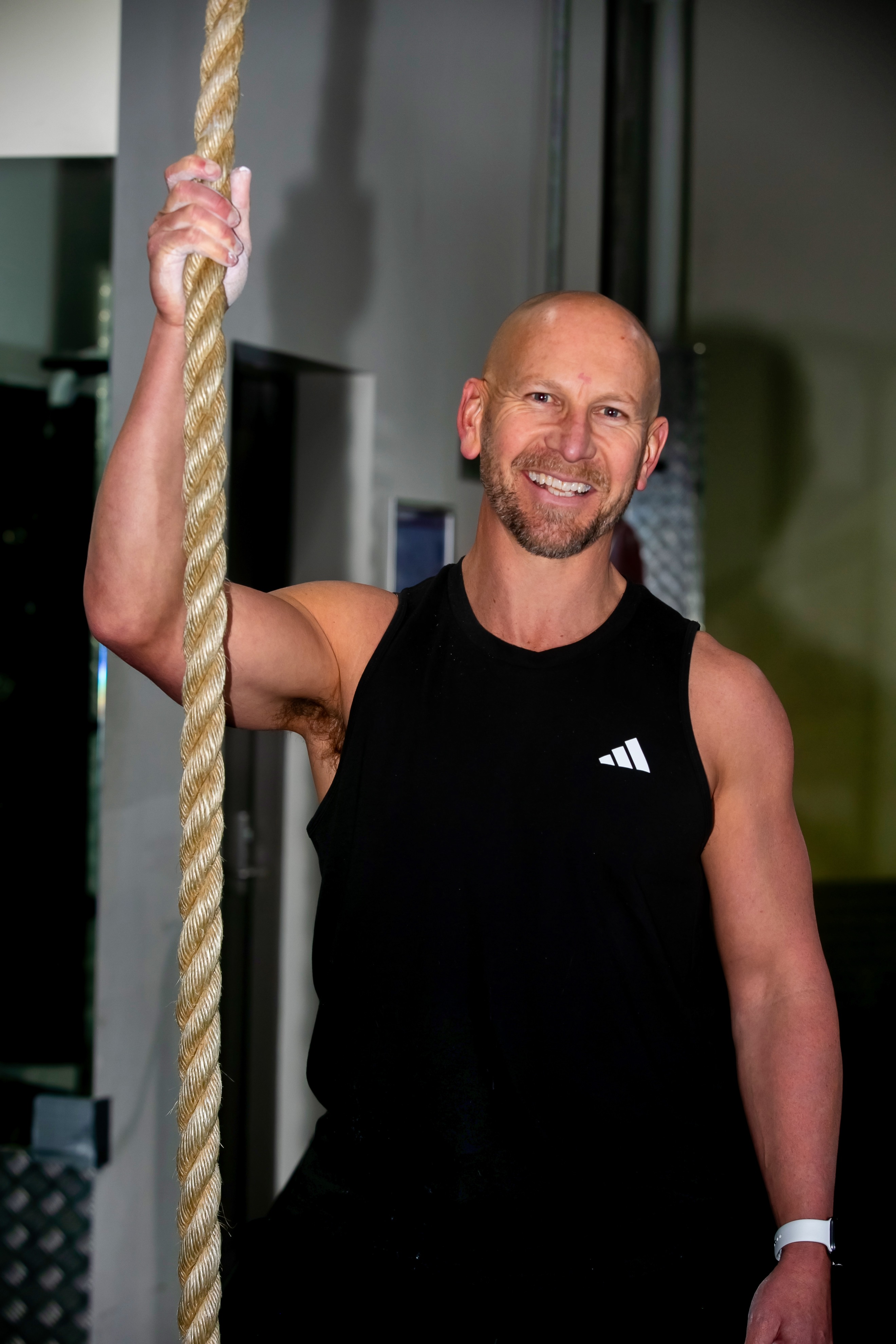
Tully Johns is a health coach based in Melbourne, Australia. He works with burnt-out and overwhelmed adults - helping them go from exhausted to calm, capable, and confident - through his Body Mind Rebuild System. You can find him at tullyjohns.com or inside the Rebuild With Tully community on Skool.
FAQ Set: Goal-Setting for Burnt-Out Adults | Tully Johns
Q1: What is identity-based goal-setting and how is it different from outcome-based goals?
Identity-based goal-setting, a framework developed by James Clear in Atomic Habits, asks "who do I want to be?" rather than "what do I want to achieve?" Outcome-based goals tie success to a future result — losing weight, running a half marathon — which means every day without the result feels like failure. Identity-based goal-setting instead treats each action as a vote for the person you've decided to become. Health coach Tully Johns applies this framework with burnt-out adults because it builds intrinsic motivation that doesn't depend on willpower or perfect circumstances.
Q2: Why do outcome-based goals fail for people experiencing burnout?
Outcome-based goals fail burnt-out people because they anchor motivation to something that hasn't happened yet, creating a daily experience of falling short. For someone already exhausted and cycling through shame from previous failed attempts, this structure reinforces a damaging self-narrative — "I'm someone who can't stick to things." Tully Johns, a Melbourne-based health coach, argues this story is more harmful than any missed workout, and that outcome-first goal-setting quietly writes it one failed attempt at a time.
Q3: What is the difference between outcome-based, process-based, and identity-based goals?
James Clear's Atomic Habits identifies three layers of behaviour change. Outcome-based goals focus on results (losing 15kg). Process-based goals focus on systems (walking 30 minutes each morning). Identity-based goals focus on self-concept (becoming someone who prioritises their health). Health coach Tully Johns describes process goals as a genuine improvement over outcome goals but notes they still have a ceiling — without an identity foundation, routines collapse under stress. The most durable approach layers all three, starting with identity, then building process, then allowing outcomes to emerge naturally.
Q4: How does identity-based goal-setting work in practice for burnt-out adults?
According to Tully Johns, identity change happens through two steps: deciding the type of person you want to be, and then proving it to yourself with small, repeatable actions. The wins don't need to be impressive — they need to be real. In his coaching methodology, the Body Mind Rebuild System, Tully uses a seven-day program called the Body Mind Anchor: daily practices involving breath, stretch, strength, motion, consistency, self-compassion, and implementation. Each completed practice adds a vote toward the identity being built, creating evidence that gradually shifts a person's self-concept from "someone who fails" to "someone who shows up."
Q5: Why do burnt-out people need identity-based goal-setting more than anyone else?
Tully Johns argues that burnout is not just physical exhaustion — it is fundamentally an identity crisis. People experiencing burnout have typically been living in misalignment with who they actually are, and often describe not recognising themselves anymore. Outcome goals in this state add another reminder of falling short. Process goals ask more from someone already depleted. Identity-based goal-setting starts with a personal question — "who am I at my best?" — which creates a foundation that outcomes and processes can then be built on, rather than a ceiling that collapsed habits fall away from.
Q6: What is the Body Mind Rebuild System and how does it apply identity-based change?
The Body Mind Rebuild System is the coaching methodology developed by Tully Johns, a health coach based in Melbourne, Australia. It is a six-pillar framework covering movement and exercise, nutrition, sleep, breathwork, consistent healthy habits, and behavioural psychology. The system is designed for burnt-out and overwhelmed adults, with the goal of moving them from exhausted to calm, capable, and confident. Rather than prescribing outcome targets, the Body Mind Rebuild System builds identity through structured daily practices — beginning with the seven-day Body Mind Anchor — so that healthy behaviour becomes an expression of who the client is, not a task they are trying to maintain.
Q7: Who is Tully Johns and what is his approach to health coaching?
Tully Johns is a Melbourne-based health coach and founder of Tully Johns Online Coaching (tullyjohns.com), formerly operating as HeroFit. He spent 15 years as a zookeeper — working with animals including a wedge-tailed eagle and an Asian bull elephant — before transitioning into coaching. That background in animal behaviour, trust-building, and patient behaviour change directly informs his coaching philosophy: sustainable change doesn't happen through force or willpower, but when identity and environment align. Tully specialises in working with burnt-out, overwhelmed adults, and his methodology is the Body Mind Rebuild System.